
How to Relieve Neck Pain from Desk Work: 8 Real Fixes

If your neck starts aching by mid-afternoon, you’re far from alone — neck pain is one of the most common complaints among people who spend most of the day at a desk. The good news is that most desk-related neck pain comes from a handful of fixable habits, not something more serious. Here are 8 practical ways to relieve it, starting today.
This article is for general information only and isn’t a substitute for professional medical advice. If your pain is severe, persistent, or comes with numbness or weakness, talk to a doctor.
Why Desk Work Causes Neck Pain in the First Place

Most “desk neck” comes down to a few repeated patterns:
- Forward head posture (“tech neck”) — leaning toward a screen shifts the weight of your head forward, straining the neck muscles that hold it up
- Low or off-center monitors — force your neck into an unnatural angle for hours at a time
- Staying still for too long — muscles tighten up from lack of movement, not just from “bad posture”
- Stress — many people unconsciously hold tension in their shoulders and neck when focused or stressed
1. Adjust Your Monitor Height
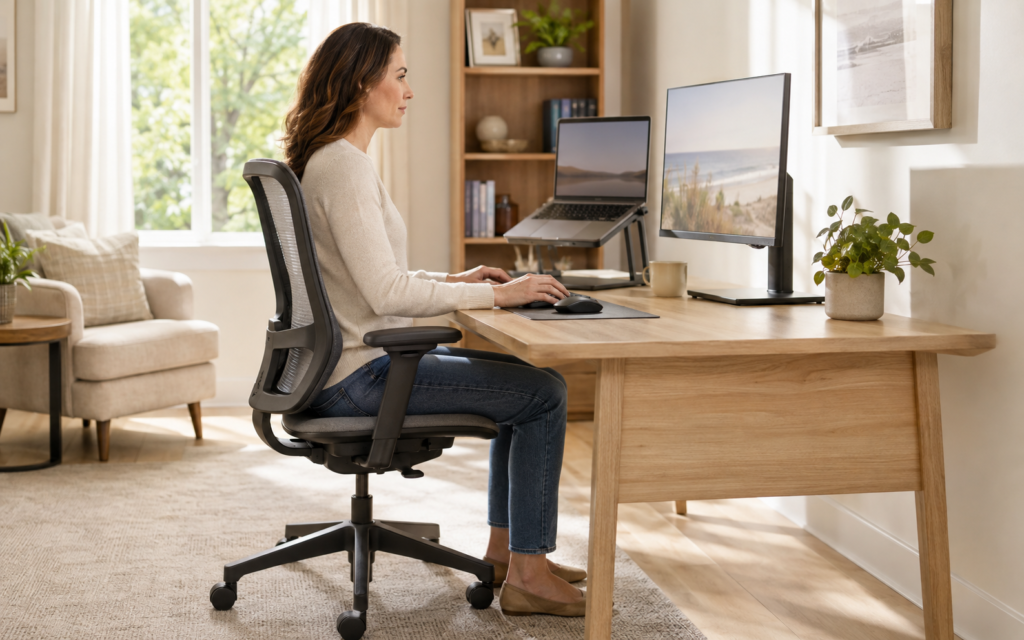
Your screen’s top edge should sit roughly at eye level, about an arm’s length away. If you’re using a laptop, a stand (or a stack of books) plus an external keyboard can make a bigger difference than most people expect.
2. Follow the 20-20-20 Rule
Every 20 minutes, look at something 20 feet away for 20 seconds. This isn’t just for eye strain — it naturally prompts you to lift your head and reset your posture throughout the day.
3. Do Short Neck Stretches Every Hour

A few simple stretches can prevent tension from building up:
- Gently tilt your ear toward your shoulder, hold 15–20 seconds, switch sides
- Slowly turn your head to look over each shoulder
- Roll your shoulders backward in a slow circle 5–10 times
4. Set a Movement Reminder
Sitting still is often a bigger culprit than posture itself. A short walk or stand-up break every 45–60 minutes helps prevent the stiffness that builds up from staying in one position too long.
5. Check Your Chair and Desk Setup
Your lower back should be supported, your feet flat on the floor, and your elbows at roughly a 90-degree angle when typing. A chair that’s too low or too high forces your neck to compensate.
6. Use Heat to Relax Tight Muscles

Applying heat — whether a warm compress or a heated massager — helps relax tense muscle fibers and improve local blood flow, making it easier for tight areas to loosen up. See our guide on Shiatsu Massage Benefits for more on how heat and massage work together.
7. Add a Daily Shiatsu Massage Session

For many desk workers, a few minutes of targeted massage at the end of the day (or even during a lunch break) makes a real difference in how the neck feels by evening. A shiatsu neck and shoulder massager uses rotating nodes to knead directly into the trapezius muscles — the same muscles that take the brunt of desk posture. If you want something more portable to also use on your lower back later in the day, our Massage Pillows collection is worth a look too.
Not sure which device fits your budget and needs? See our full Best Massager for Neck Pain buying guide, or check our top-rated picks for 2026.
8. Know When to See a Professional
Most desk-related neck pain responds well to the fixes above within a couple of weeks. See a doctor or physical therapist if you experience:
- Pain that doesn’t improve with rest, stretching, or posture changes
- Numbness, tingling, or weakness in your arms or hands
- Pain following an injury
- Headaches that consistently follow neck stiffness
FAQs
How long does it take for desk-related neck pain to go away? For most people, consistent posture changes and daily stretching or massage show noticeable improvement within 1–2 weeks, though this varies by individual.
Is a neck massager actually helpful for desk-related pain, or is it just posture? Both matter — a massager helps release existing tension quickly, while posture and setup changes address the root cause so the tension doesn’t keep coming back. See How to Use a Neck Massager Safely and Effectively for how to get the most out of one.
Should I use heat or cold for desk-related neck pain? Heat is generally better for muscle tightness and stiffness (the most common cause of desk neck pain), while cold is more suited to acute swelling or injury.
Can poor posture cause headaches too? Yes — tightness in the neck and upper shoulders is a common trigger for tension headaches, since the muscles are closely connected to the base of the skull.
The Bottom Line
Desk-related neck pain is almost always fixable with a combination of better setup, regular movement, and targeted relief like a shiatsu massager. Start with your monitor height and a daily stretching habit, then add massage for the tension that builds up anyway. Browse our Neck & Shoulder Massagers collection, or head back to the ShiatsuStore homepage to explore everything we offer.