
How to Release Neck Trigger Points at Home
If you’ve ever felt a small, sensitive “knot” in your neck or shoulder that seems to ache no matter what you do, you’ve likely encountered a trigger point. Here’s what they actually are, why they form, and the most effective ways to release them without booking a professional appointment.
What Is a Trigger Point, Exactly?
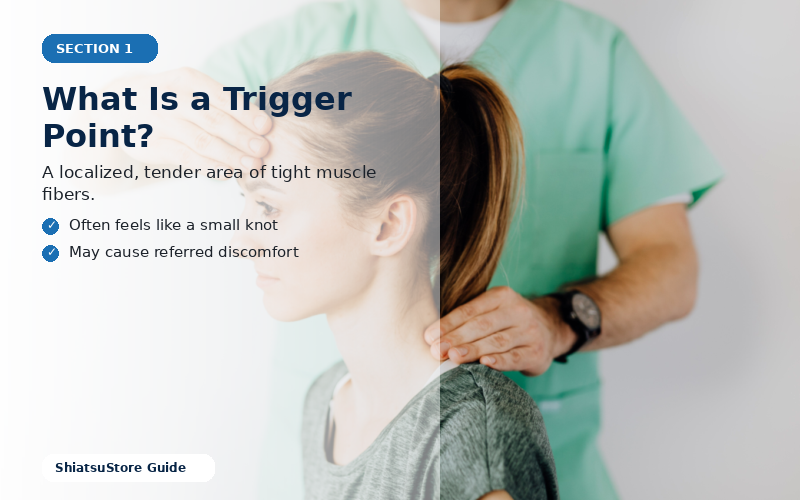
A trigger point is a small area of tight, contracted muscle fibers within a larger muscle — commonly described as a “knot.” Unlike general muscle tightness, trigger points are localized and often tender to the touch, and they can sometimes cause pain that radiates to nearby areas (called “referred pain”). In the neck and shoulders, trigger points frequently form in the trapezius and levator scapulae muscles.
Why Trigger Points Form in the Neck and Shoulders
- Prolonged poor posture — especially forward head posture from screen use
- Repetitive strain — the same muscle movement repeated for hours
- Stress — muscles that stay unconsciously tensed for extended periods
- Staying still too long — lack of movement lets localized tightness set in and persist
For the fuller picture of root causes, see What Causes Neck and Shoulder Tension?
How to Find a Trigger Point
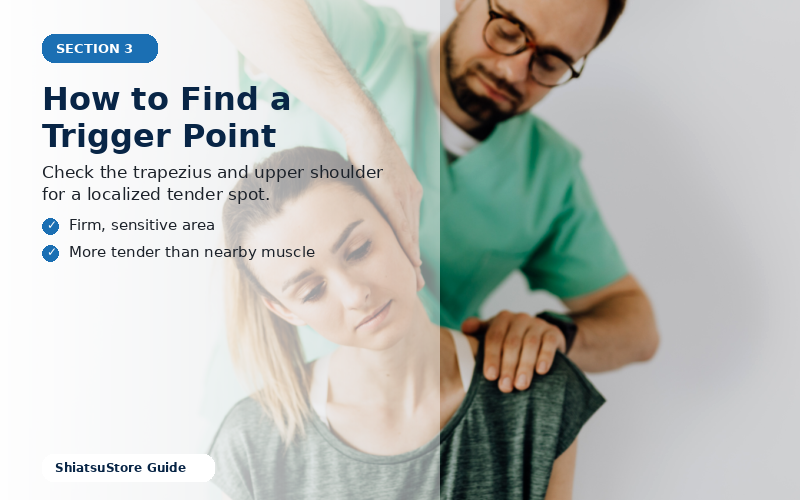
Gently press along your trapezius (the muscle running from your neck to your shoulder) and upper shoulder blade area. A trigger point typically feels like a small, firm, tender spot — often more sensitive than the surrounding muscle, and sometimes it produces a dull ache that spreads toward your head or down your arm when pressed.
How to Release Trigger Points at Home
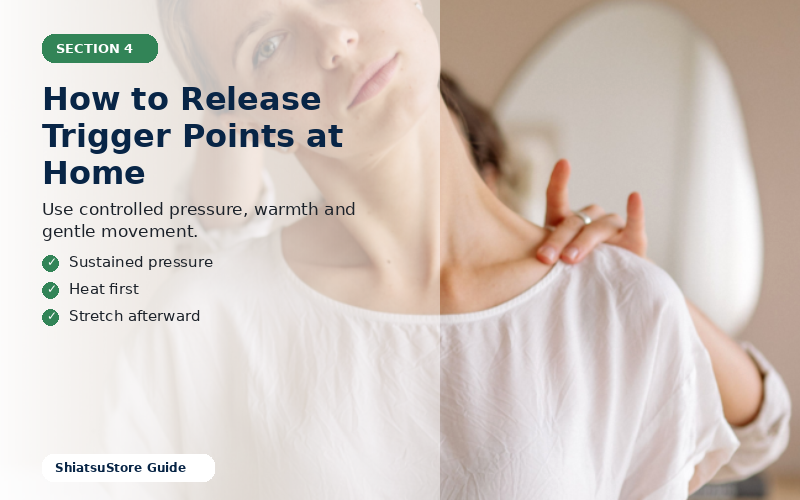
1. Sustained Direct Pressure
Apply firm, steady pressure directly on the trigger point for 20–30 seconds. The discomfort often eases as the muscle fibers begin to relax — this is the same principle behind acupressure and shiatsu massage.
2. Heat Before Pressure
Applying heat for a few minutes before working on a trigger point helps the muscle fibers relax and makes the pressure more effective and comfortable.
3. Shiatsu Massage
A shiatsu neck massager’s rotating nodes apply the same kind of sustained, targeted pressure a hands-on release technique would — without needing a second person or precise self-massage technique. Learn how the mechanism works in How Does a Shiatsu Massager Work?
4. Gentle Stretching After Release
Once a trigger point starts to loosen, gentle stretching of the surrounding muscle helps reinforce the release rather than letting it tighten back up immediately.
5. Consistency Over Intensity
One firm session rarely resolves a stubborn trigger point permanently — regular, moderate pressure over several days tends to produce more lasting results than one aggressive attempt.
Using a Massager for Trigger Point Relief
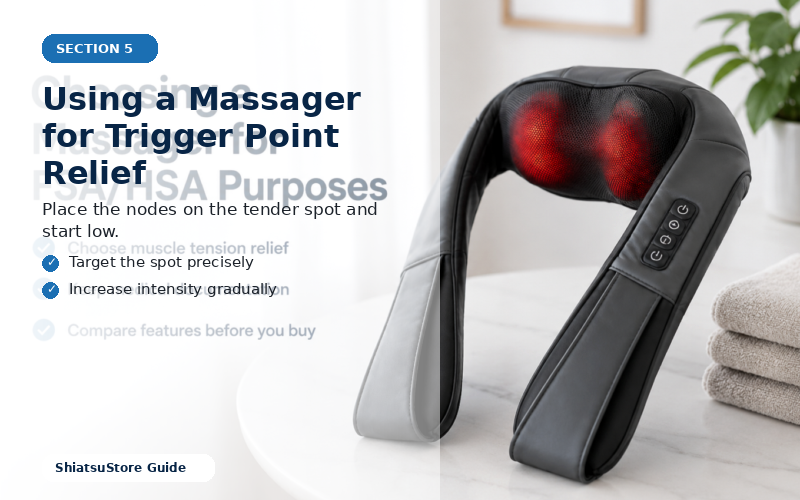
Position a shiatsu neck and shoulder massager so the nodes land directly on the tender spot you’ve identified, rather than just generally around the neck. Start on a lower intensity — trigger points are often more sensitive than the surrounding muscle, and too much pressure too quickly can cause discomfort rather than relief.
Trigger points in the neck and shoulders are also a common contributor to tension headaches — see Can a Massager Help with Tension Headaches? for that connection in more detail.
When a Trigger Point Might Need Professional Care
Most trigger points respond well to consistent self-care. Consider seeing a physical therapist or massage therapist if:
-
- The same trigger point keeps returning despite consistent home treatment
- Pain radiates significantly or is accompanied by numbness or weakness
- The area doesn’t improve after 1–2 weeks of regular self-care
FAQs
How long does it take to release a trigger point?
Some relief can happen within a single session, but fully resolving a stubborn trigger point often takes consistent treatment over several days to a couple of weeks.
Is it normal for a trigger point to hurt when pressed?
Yes — tenderness on direct pressure is a defining characteristic of a trigger point, distinguishing it from general muscle soreness.
Can trigger points come back after they’re released?
Yes, especially if the underlying cause (posture, repetitive strain, stress) isn’t addressed alongside the release itself.
Is a foam roller as effective as a shiatsu massager for neck trigger points?
Foam rollers work well for larger muscle groups like the back and legs, but they’re not practical or safe for the neck — a shiatsu massager or manual technique is a better fit for this area.
The Bottom Line
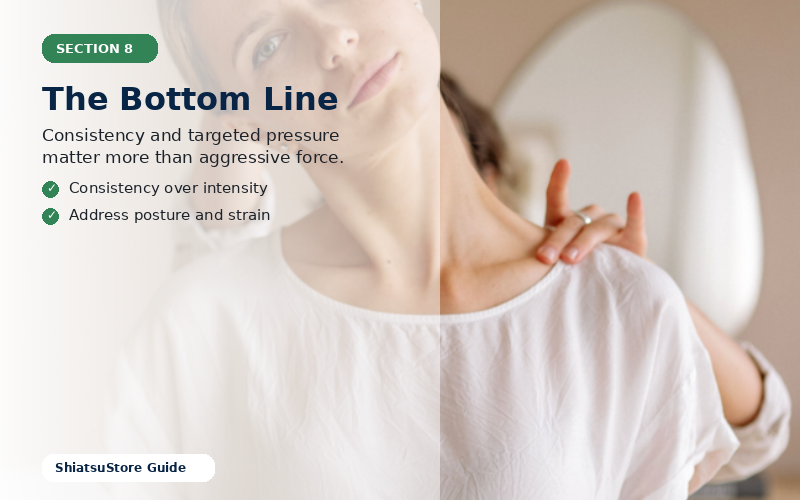
Trigger points are a common, very fixable source of neck and shoulder discomfort — sustained, targeted pressure (whether by hand or with a shiatsu massager) combined with consistency is the most effective at-home approach. Browse our Neck & Shoulder Massagers collection, or head back to the ShiatsuStore homepage.