
What Is Acupressure? Can It Relieve Neck & Shoulder Pain?
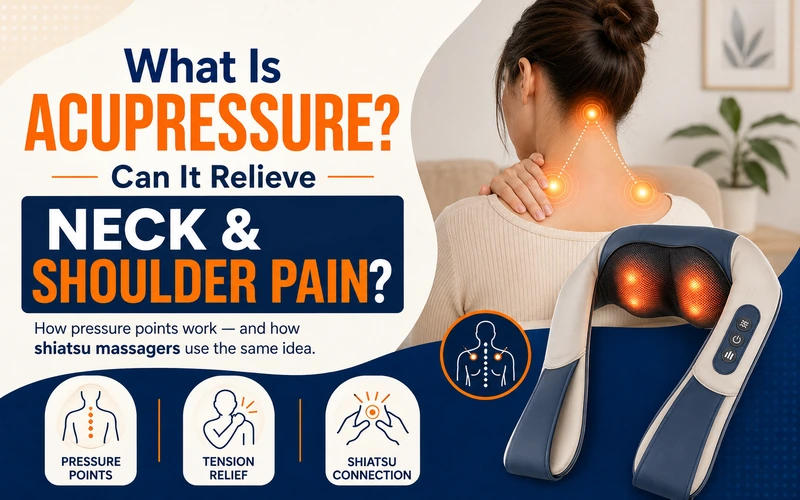
Acupressure is one of the oldest bodywork techniques still widely used today, and it’s actually the foundation behind how shiatsu massagers work. If you’ve wondered whether pressing on specific points of the body can genuinely ease neck and shoulder pain, here’s what acupressure is, how it relates to shiatsu, and what the evidence says.
What Is Acupressure?
Acupressure is a traditional Chinese medicine technique that involves applying firm, sustained pressure to specific points on the body — known as acupoints — believed to correspond to different areas of tension and energy flow. Unlike acupuncture, no needles are involved; it’s done entirely through touch and pressure.
How Acupressure Relates to Shiatsu
Shiatsu, the Japanese massage technique behind most modern neck massagers, developed from many of the same underlying principles as acupressure — both use finger and palm pressure on specific points to release tension. In practice, a shiatsu neck massager mechanically recreates acupressure-style pressure using rotating nodes rather than fingers. Read the full technical breakdown in How Does a Shiatsu Massager Work?
Common Acupressure Points for Neck and Shoulder Pain
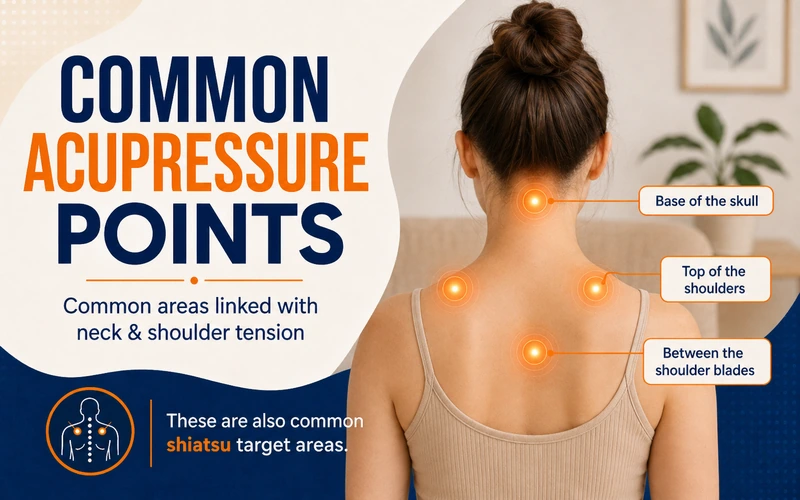
While a full acupressure session should ideally be guided by a trained practitioner, a few commonly referenced points for neck and shoulder tension include:
- Base of the skull (where the neck meets the head) — often tight from forward head posture
- Top of the shoulders (along the trapezius) — a common area for stress-related tension
- Between the shoulder blades — frequently tight from prolonged sitting
These are the same general areas that shiatsu neck and shoulder massagers are designed to target with their node placement.
What Does the Evidence Say?
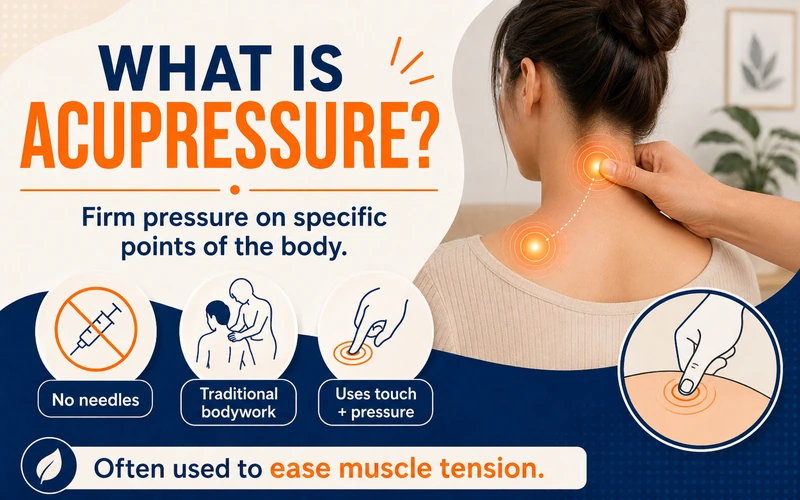
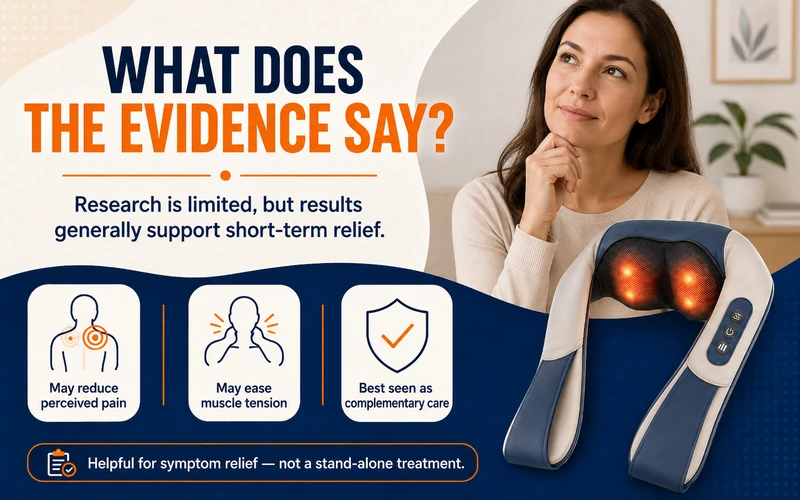
Research on acupressure specifically is more limited than on massage therapy broadly, but the existing evidence generally supports short-term reductions in perceived pain and muscle tension when pressure is applied consistently to relevant points. It’s best understood as a complementary approach rather than a stand-alone treatment for serious or chronic conditions. For a broader look at massage-related evidence, see Shiatsu Massage Benefits: What Science Says.
Acupressure vs. Using a Shiatsu Massager
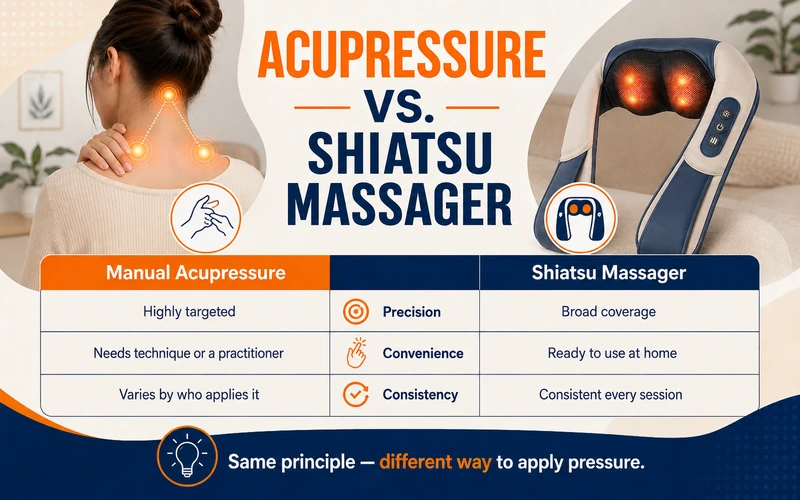
| Manual Acupressure | Shiatsu Massager | |
|---|---|---|
| Precision | Highly targeted (with proper technique) | Broad coverage of common tension areas |
| Convenience | Requires learning technique or a practitioner | Ready to use at home, no training needed |
| Consistency | Varies by who’s applying it | Consistent pressure and pattern every session |
For most people looking for convenient, at-home relief without learning precise point locations, a shiatsu massager offers a practical way to apply the same underlying principle. See our Neck & Shoulder Massagers collection or our root-cause guide on what causes neck and shoulder tension.
FAQs
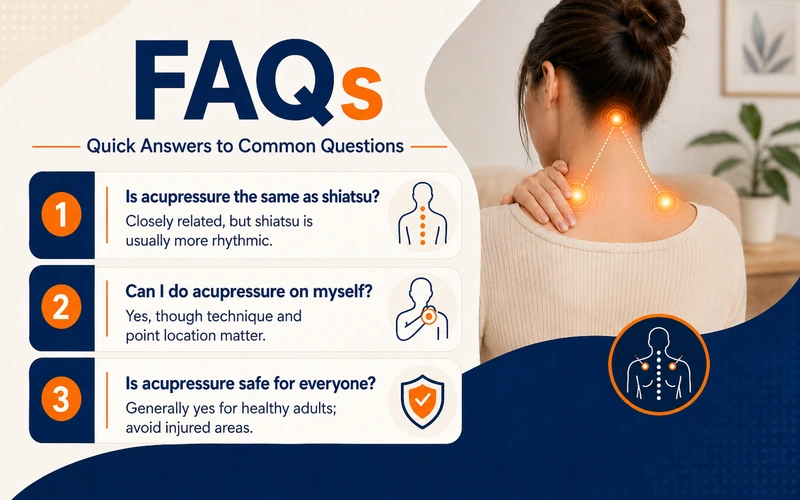
Is acupressure the same as shiatsu? They’re closely related — shiatsu developed from similar principles and applies pressure in a more rhythmic, flowing pattern, while traditional acupressure often holds pressure on a single point for a set period.
Can I do acupressure on myself for neck pain? Yes, though results depend on accurate point location and technique — a shiatsu massager offers a more consistent, hands-free way to apply similar pressure to common tension areas.
Is acupressure safe for everyone? Generally yes for healthy adults, though it’s best to avoid pressure directly over injuries, and pregnant individuals should check with a doctor before trying acupressure techniques.
The Bottom Line
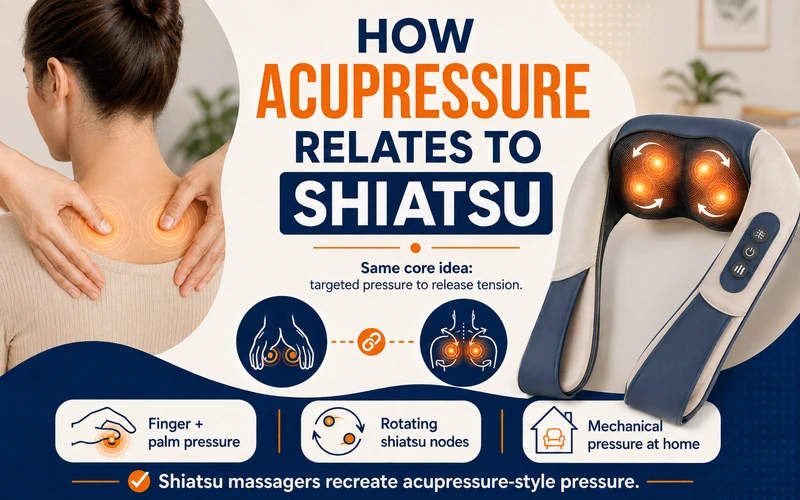
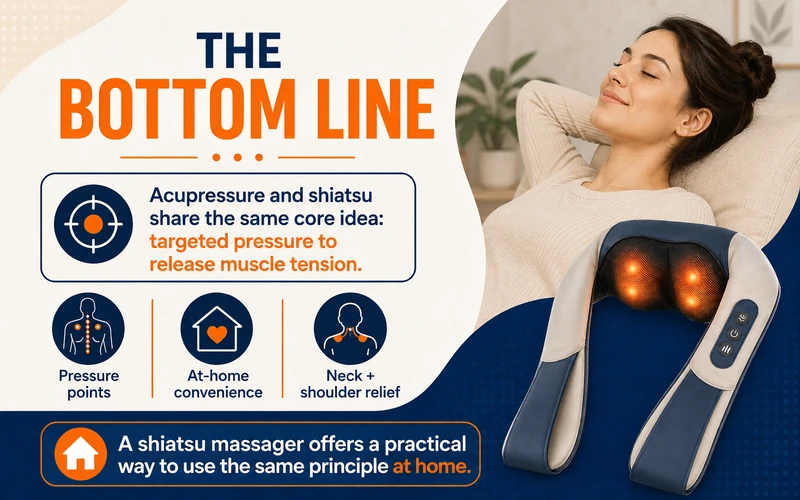
Acupressure and shiatsu share the same core idea — targeted pressure to release muscle tension — with shiatsu massagers offering a convenient, mechanical way to apply it at home. Explore our Neck & Shoulder Massagers collection, or head back to the ShiatsuStore homepage.
Disclaimer: This article is for general informational purposes only and is not a substitute for medical advice, diagnosis, or treatment. If you have a medical condition, recent injury, unexplained pain, numbness, weakness, pregnancy-related concerns, or any uncertainty about using massage or acupressure techniques, consult a qualified healthcare professional.