
Shiatsu vs Percussion Massager: What’s the Difference?
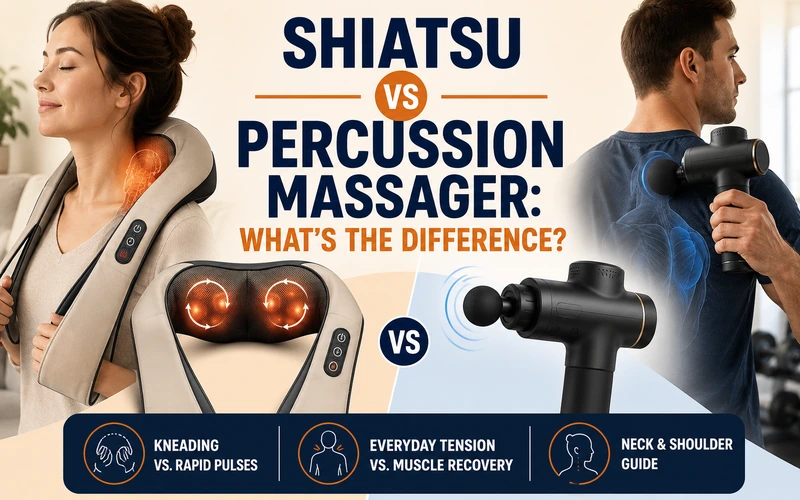
These two are often lumped together as “massagers,” but they work in fundamentally different ways and are built for different kinds of relief. If you’re deciding between a shiatsu neck massager and a percussion device (massage gun), here’s exactly how they compare.
How Each One Works
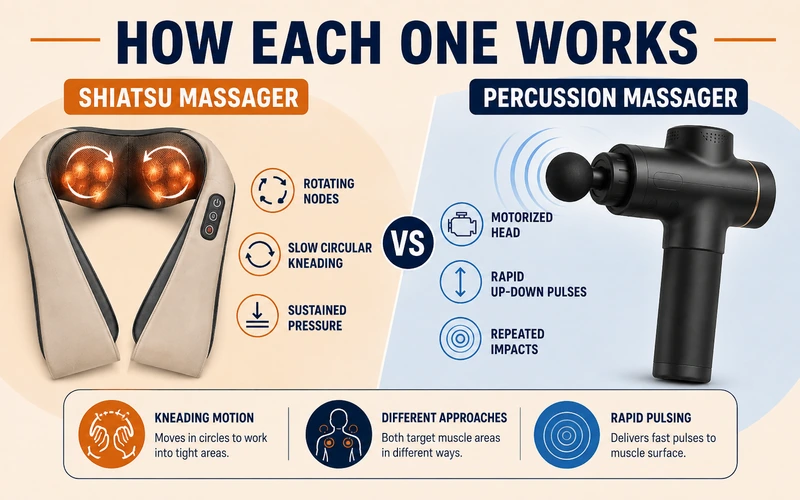
Shiatsu massagers use rotating internal nodes that move in opposite directions, recreating the finger-pressure kneading technique of traditional Japanese massage. The motion is slow, circular, and sustained.
Percussion massagers (commonly called massage guns) use a motorized head that pulses rapidly up and down against the muscle — dozens of times per second — delivering short, repeated impacts rather than continuous pressure.
For the full breakdown of shiatsu technology specifically, see How Does a Shiatsu Massager Work?
Side-by-Side Comparison
| Shiatsu Massager | Percussion Massager | |
|---|---|---|
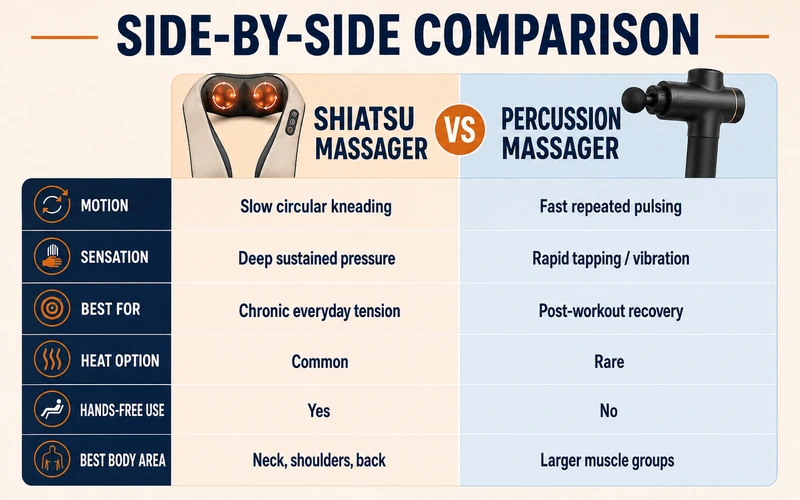
| Motion | Slow, circular kneading | Fast, repeated pulsing |
| Sensation | Deep, sustained pressure | Rapid tapping/vibration |
| Best for | Chronic, everyday tension | Post-workout muscle recovery |
| Heat option | Common | Rare |
| Hands-free use | Yes (wraps around neck/shoulders) | No (requires holding and aiming) |
| Best body area | Neck, shoulders, back | Larger muscle groups (legs, back) |
Which One Is Better for Neck Pain?
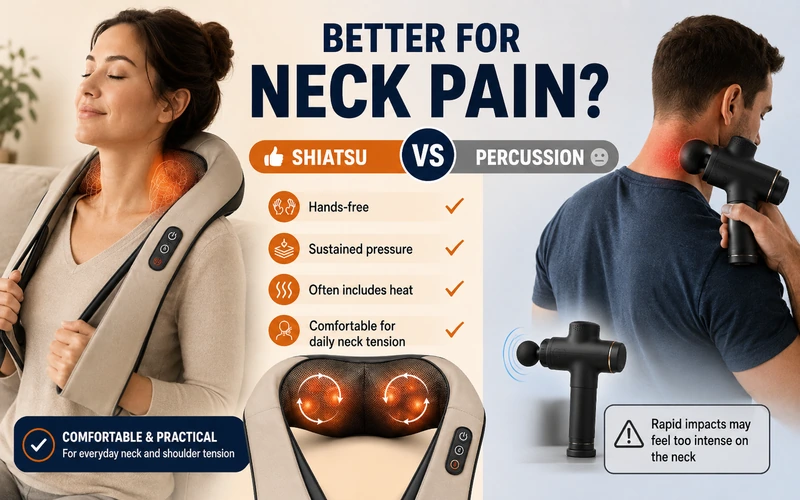
For sustained, everyday neck and shoulder tension — the kind that builds up from desk work or stress — a shiatsu massager is generally the more comfortable and practical choice. It’s hands-free, uses sustained pressure the neck responds well to, and often includes heat. A percussion massager’s rapid impacts can feel too intense or awkward to hold steady against the neck for extended periods.
Which One Is Better for Muscle Recovery?
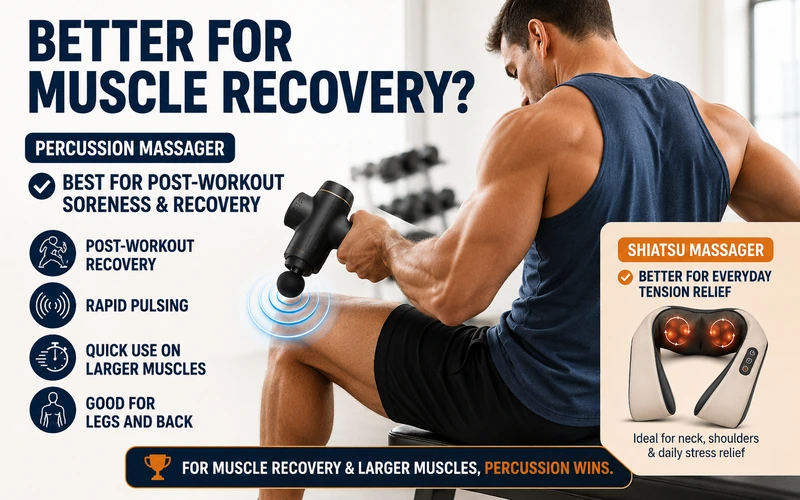
If your main concern is post-workout soreness or muscle recovery in larger areas like the legs or back, a percussion massager’s rapid pulsing is specifically designed for that purpose and tends to be more effective for breaking up post-exercise tightness quickly.
Can You Use Both?
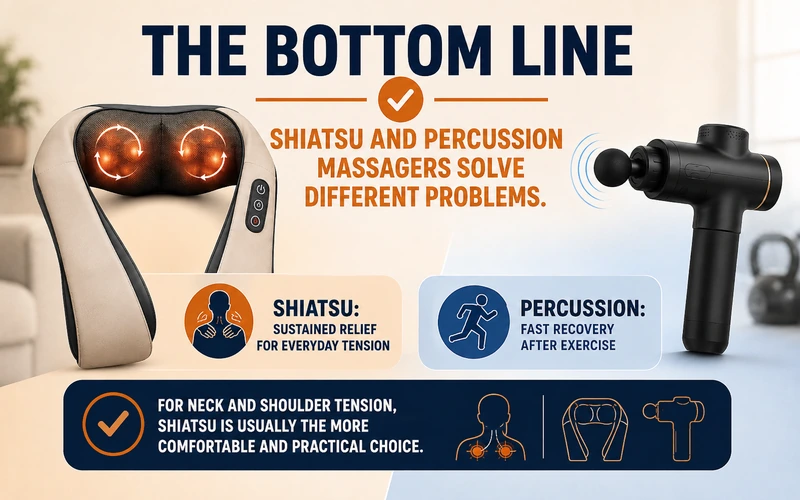
Yes — many people use a shiatsu massager for daily neck and shoulder maintenance and a percussion device separately for post-workout recovery in larger muscle groups. They’re not competing products so much as tools for different situations. See our full Types of Massagers Explained for how these fit alongside other massager types.
FAQs
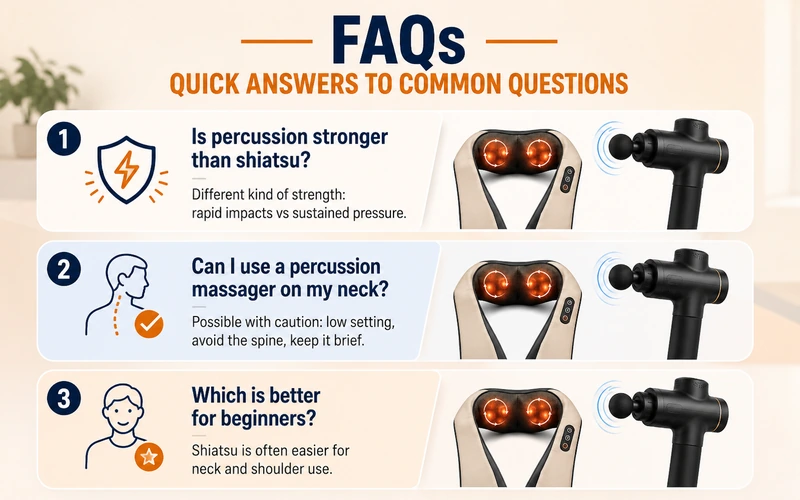
Is a percussion massager stronger than a shiatsu massager? “Stronger” depends on the metric — percussion delivers more forceful, rapid impacts, while shiatsu delivers deeper, sustained pressure. Neither is universally more powerful; they’re suited to different needs.
Can I use a percussion massager on my neck? It’s possible but requires caution — use the lowest setting, avoid direct pressure on the spine, and keep sessions brief, since the neck is more sensitive than larger muscle groups.
Which is better for someone new to massagers? A shiatsu massager is generally more beginner-friendly for neck and shoulder use, since it’s hands-free and the pressure is more predictable and sustained.
The Bottom Line
Shiatsu and percussion massagers solve different problems — sustained relief for everyday tension versus fast recovery after exercise. For neck and shoulder tension specifically, shiatsu is the more comfortable and practical choice. See our top-rated shiatsu picks for 2026, or browse the full Neck & Shoulder Massagers collection. Head back to the ShiatsuStore homepage any time.
Disclaimer: This article is for general informational purposes only and is not a substitute for medical advice, diagnosis, or treatment. If you have an injury, acute pain, unexplained symptoms, a medical condition, or questions about using a massage device on the neck or other sensitive areas, consult a qualified healthcare professional.