
What Makes a Deep Tissue Neck Massager Different?
“Deep tissue” is one of the most common terms attached to neck massagers, but it’s often used loosely. Here’s what it actually means from a mechanical standpoint, and how to tell if a device genuinely delivers deep tissue pressure or is just borrowing the term.
What “Deep Tissue” Actually Means
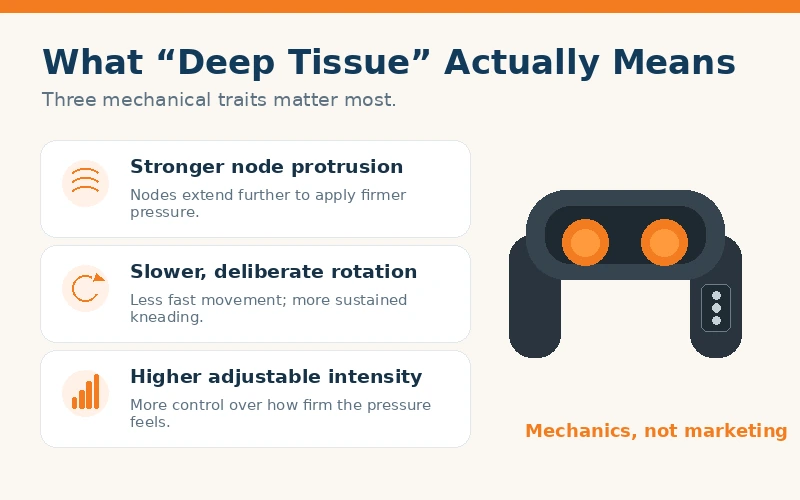
In professional massage therapy, deep tissue refers to sustained, firm pressure that reaches beneath the surface muscle layers to address chronic tightness and adhesions. In a massager, this translates to:
- Stronger node protrusion — nodes that extend further to press deeper into the muscle
- Slower, more deliberate rotation — rather than fast, shallow movement
- Higher adjustable intensity settings — giving you control over how deep the pressure goes
Deep Tissue vs. Standard Shiatsu Massagers
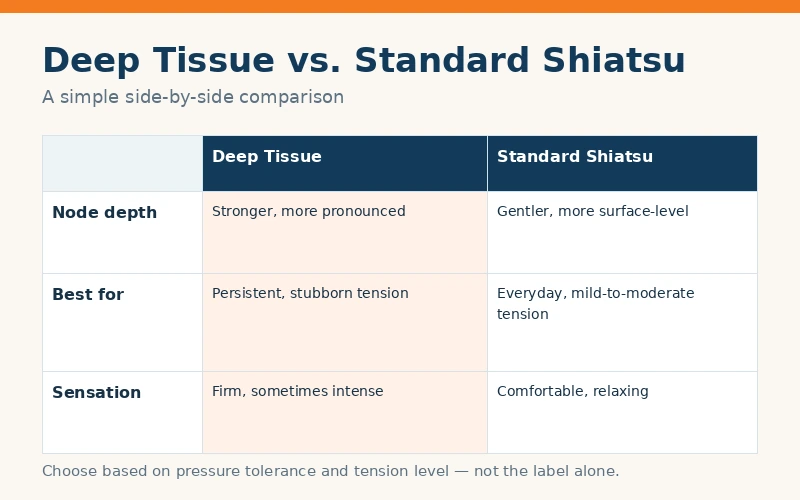
| Deep Tissue Massager | Standard Shiatsu Massager | |
|---|---|---|
| Node depth | Stronger, more pronounced | Gentler, more surface-level |
| Best for | Chronic, stubborn tension | Everyday, mild-to-moderate tension |
| Sensation | Firm, sometimes intense | Comfortable, relaxing |
For the full breakdown of how the underlying node technology works, see How Does a Shiatsu Massager Work?
Who Benefits Most from Deep Tissue Pressure
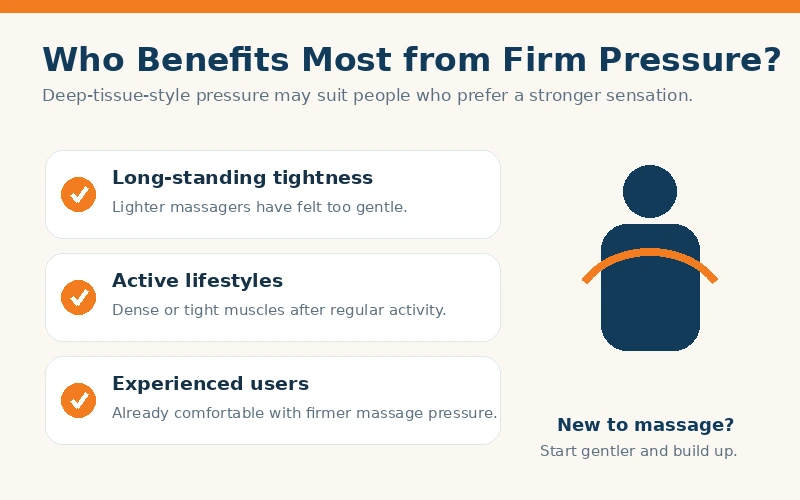
- People with chronic, long-standing neck and shoulder tightness that lighter massagers haven’t fully resolved
- Athletes or physically active individuals with dense, tight muscle tissue
- Anyone who’s tried a standard massager and found the pressure too gentle to feel real relief
If you’re newer to massagers or have sensitive muscles, a lower-intensity model may be more comfortable to start with — see our full buying guide for neck pain for options across intensity levels.
Our Deep Tissue Pick
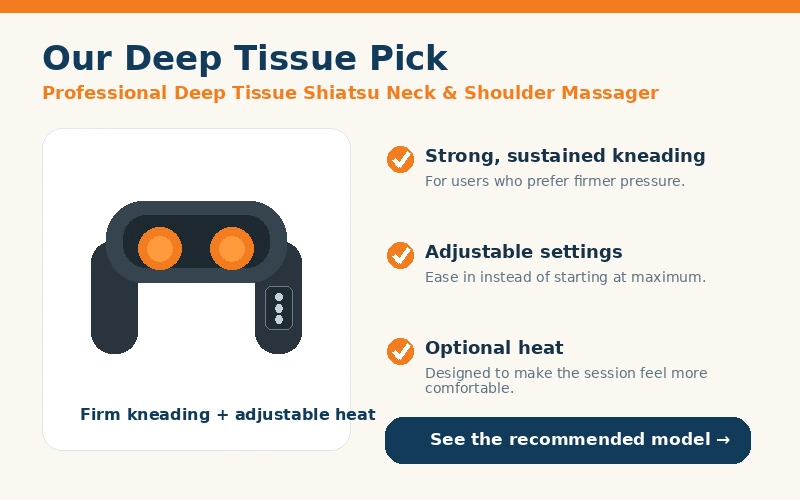
The Professional Deep Tissue Shiatsu Neck & Shoulder Massager is built specifically for stronger, sustained kneading, with adjustable heat to help muscles relax into the deeper pressure rather than resist it.
How to Use a Deep Tissue Massager Safely
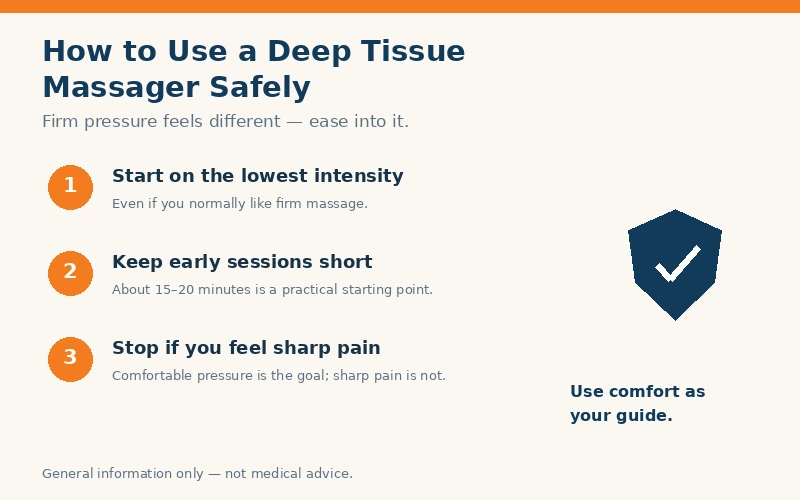
Deep tissue pressure is more intense, so it’s worth easing into it:
- Start on the lowest intensity, even if you’re used to firm massage
- Keep sessions to 15–20 minutes, especially at first
- Stop if you feel sharp pain (mild soreness afterward, similar to a deep massage, is normal — sharp pain is not)
FAQs
Is a deep tissue neck massager better than a regular one? Not objectively better — it depends on your tension level and pressure tolerance. Chronic, stubborn tightness often responds better to deep tissue pressure, while mild tension may be more comfortably managed with a gentler device.
Can a deep tissue massager cause bruising? It’s uncommon with proper use, but using too high an intensity for too long can occasionally leave temporary soreness. Starting low and easing into deeper pressure reduces this risk.
Is deep tissue massage safe every day? For most healthy adults, yes, in short 15–20 minute sessions — though some people prefer alternating deep tissue days with gentler sessions.
The Bottom Line

“Deep tissue” describes stronger, more sustained node pressure designed for chronic tension — not just a marketing label. If everyday massagers haven’t been cutting it, a dedicated deep tissue model may be worth the switch. Browse our Neck & Shoulder Massagers collection, or head back to the ShiatsuStore homepage.
Disclaimer: This article is for general informational purposes only and is not a substitute for medical advice, diagnosis, or treatment. If you have a medical condition, recent injury, unexplained pain, numbness, weakness, or concerns about using a massage device, consult a qualified healthcare professional.